 How-to
How to Recruit Electric Vehicle Engineering Staff
Last Updated: October 28, 2026
Quick Summary
Recruiting electric vehicle engineering staff starts with defining the role before searching: name the discipline, such as battery systems, powertrain, charging, vehicle software or system integration, and write down the technical skills it requires. Benchmark pay against current local offers for that specific discipline and seniority band, and decide which parts of the role need on-site attendance.
- Name the discipline, such as battery systems, powertrain or charging, before you start the search.
- Specify required technical skills in the brief and separate essential skills from helpful ones.
- Benchmark pay against current local offers for each discipline and seniority band, not one general figure.
- Decide which parts of the role need on-site attendance, such as hardware testing and HV commissioning.
- Set a hiring timeline and track time-to-hire and quality of hire to improve the process.
Table of Contents
- Defining the Role Before You Open the Search
- Hiring Automotive Engineers With Battery Expertise
- EV Engineering Salary Expectations in Australia
- Sourcing Candidates Beyond the Job Boards
- Running a Fast, Structured Hiring Process
- Deciding Between Remote and On-Site Hiring
- Retaining EV Engineering Staff After They Join
- Your Next Step: Briefing Automotive People Group on Your Engineering Roles
- Frequently Asked Questions
Defining the Role Before You Open the Search
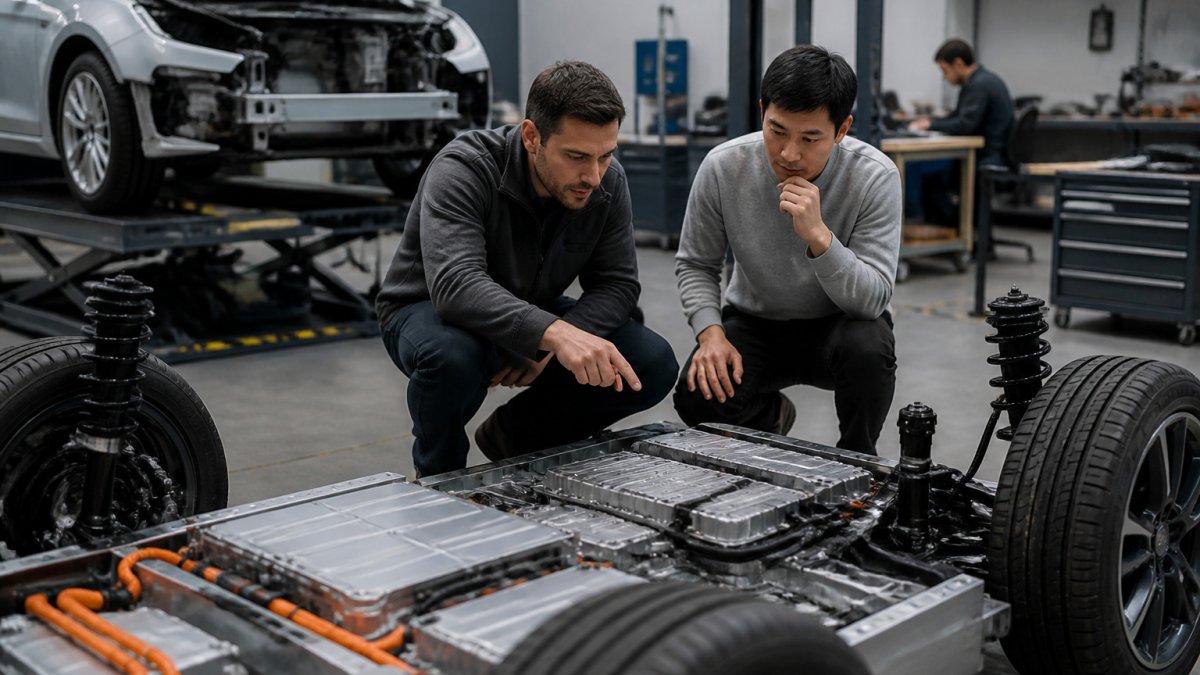
A clear brief can help define the role before the search begins.
Before you contact a recruiter or post an advert, agree on what the person will actually do. Electric vehicle work spans several distinct disciplines, and a candidate strong in one may have little experience in another.
Core Engineering Disciplines in EV Development
Most electric vehicle engineering roles sit within a handful of core disciplines:
- Battery systems: cell chemistry, battery management systems and thermal management
- Powertrain design: motors, inverters and power electronics
- Charging infrastructure: charger hardware, grid connection and communication protocols
- Vehicle software: embedded controls, diagnostics and over-the-air updates
- System integration: bringing all of the above together into a working vehicle
Decide which of these your team needs now, and which can wait. Name the discipline when hiring for "EV engineering."
Technical Skills to Specify in the Brief
Write the technical requirements down before the search starts. A useful brief names the tools, standards and systems the person must already know, and separates those from skills they can learn on the job.
Be specific. "Experience with battery management systems" tells a candidate far more than "strong technical background." Also state which skills are essential and which are simply helpful. This stops you rejecting good people for missing a nice-to-have.
Hiring Automotive Engineers With Battery Expertise
Battery expertise deserves consideration in its own search plan. Candidates may come from energy storage, consumer electronics or motorsport as well as mainstream automotive. See how a specialist automotive recruitment service approaches technical battery roles.
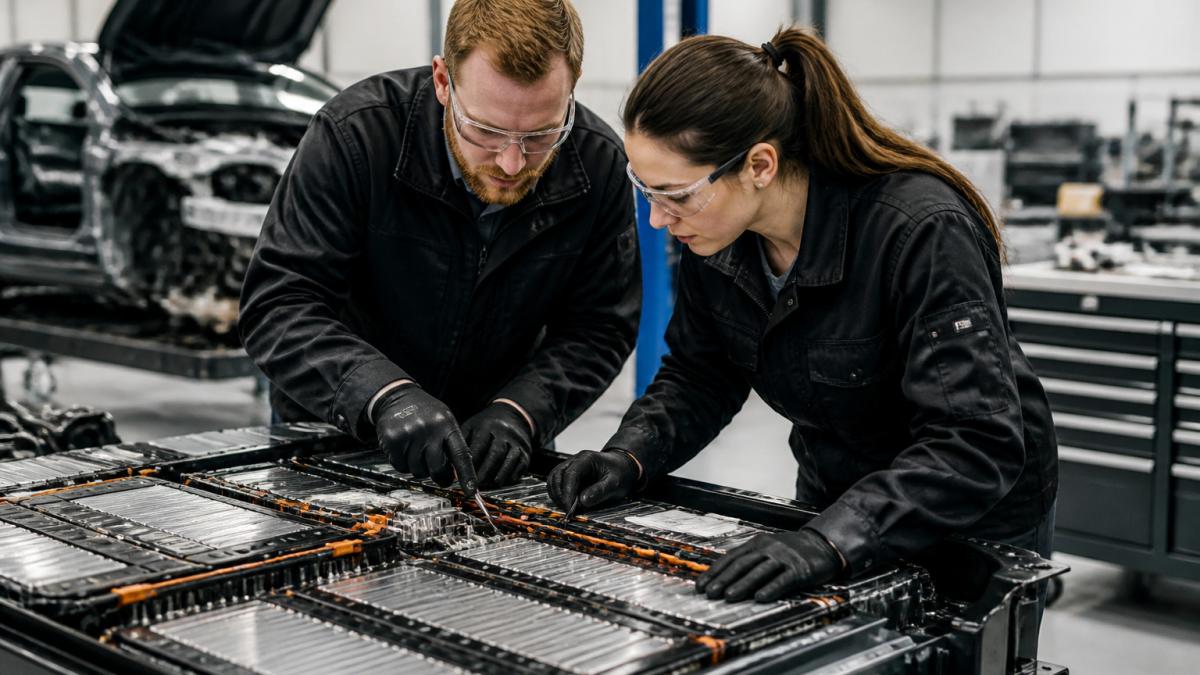
Cell-level chemistry, pack design and battery management software are different specialties. Ask candidates about relevant experience with the areas required for the role.
Ask candidates about their experience with production-vehicle constraints, such as cost targets, packaging limits and crash safety requirements.
EV Engineering Salary Expectations in Australia
Pay for electric vehicle engineers can vary by discipline, seniority, location and whether the role sits in production, development or aftersales.
Why a Single Number Fails
Two candidates with the same job title can be paid very differently depending on what they actually do. A battery management systems engineer working on cell balancing and state-of-health algorithms is not interchangeable with a pack design engineer working on structural integration and thermal propagation. Treating them as one salary band either overpays the second or loses the first.
- Graduate and junior engineers, typically the lowest band, with pay driven more by the underlying degree discipline than by EV-specific knowledge.
- Mid-level engineers, the broadest band, where pay starts to separate sharply between software, power electronics and battery specialists.
- Senior and principal engineers, the band where scarcity bites hardest, particularly for battery systems and power electronics.
- Engineering managers and technical leads, paid for scope and team size as much as for technical depth.
The Disciplines That Command a Premium
Budget for that premium before you go to market. If you set a range based on a general automotive benchmark, you will spend weeks interviewing candidates who withdraw at offer stage.
Benchmarking Against the Local Market
Rather than relying on a single published figure, benchmark each role against current local offers and recent placements. Ask your recruiter for market data on comparable roles in your state and sector, and check how your offer compares with what candidates are being paid in similar positions right now, not twelve months ago.
Total Package Levers Beyond Base Pay
- Superannuation above the statutory minimum, a low-friction way to lift the effective package.
- Sign-on or retention payments, useful where the candidate is forgoing an unvested bonus elsewhere.
- Relocation support, relevant when you are recruiting interstate for a role that needs workshop or test-rig access.
- Structured progression, a written review at six and twelve months, with a defined technical or managerial path, often matters more to senior engineers than a small base uplift.
- Flexibility, agreed remote days for design and software work, which costs little and is highly valued.
Pay Transparency and the Application Pool
You may choose to state the salary range in the advert.
The article breaks pay into seniority bands and notes that some disciplines command a premium.
| Seniority band | Pay driver |
|---|---|
| Graduate and junior engineers | Underlying degree discipline |
| Mid-level engineers | Software, power electronics and battery specialism |
| Senior and principal engineers | Scarcity, especially battery and power electronics |
| Engineering managers and technical leads | Scope and team size |
Sourcing Candidates Beyond the Job Boards
Some EV engineers may not be actively looking for a new role, so passive sourcing is one possible approach.
Drawing on Cross-Industry Talent
Candidates may come from outside automotive, including energy storage, aerospace and industrial automation.
Consider candidates' familiarity with automotive standards and production realities, alongside their adaptability and existing knowledge.
Assessing Technical Ability Fairly
A practical technical assessment is one possible way to evaluate candidates alongside CVs and interviews.
Using consistent criteria can help structure candidate assessments.
Running a Fast, Structured Hiring Process
Set a timeline for the hiring process and aim to follow it.
You can track how long each stage takes and review candidate feedback. Use recruitment success metrics such as time-to-hire and quality of hire to measure and improve the process.
Deciding Between Remote and On-Site Hiring
The suitability of remote work for an EV engineering role depends on the work involved. Consider the role's requirements when deciding on a working arrangement.
Map the Role Against Physical Dependencies
Before you decide, list what the person needs in order to do the job. A useful split is:
- Largely remote-friendly, embedded software, controls algorithm development, diagnostics, simulation, data analysis, system architecture and technical documentation.
- Hybrid by nature, system integration, design-for-manufacture reviews, supplier liaison and validation planning, which need periodic access to prototypes, test rigs and cross-functional teams.
- On-site dependent, hardware testing, HV (high-voltage) commissioning, prototype build, workshop and dyno work, and any task governed by safety procedures that require a competent person present.
Tell candidates which parts of the role require attendance.
The Compliance Layer Most Guides Skip
Remote and hybrid arrangements involve considerations beyond preference. Employers should consult current official Australian work health and safety guidance when assessing work arrangements and role-specific risks.
Structuring a Distributed Engineering Team
Where a hybrid model is appropriate, the teams that make it work tend to share a few habits:
- Anchor days, one or two fixed days a week when the whole team is on site, so integration and design reviews happen face to face.
- A single source of truth, drawings, requirements, test results and change records kept in one accessible system, so remote engineers are not working from stale documents.
- Explicit handover rituals, a short written handover between hardware and software streams at the end of each week, which prevents the drift that plagues distributed teams.
- Named on-site contacts, a senior engineer who owns the physical side of the work and can act as the remote team's eyes and hands.
- Time-zone discipline, if you are recruiting interstate or internationally, agree core overlap hours and put them in the offer.
Recruiting Beyond Your Commute
A hybrid model may allow employers to consider candidates from a wider geographic pool. The role's location and attendance requirements can be made clear to candidates.
When On-Site Is the Right Answer
For roles centred on test, validation, prototype build or HV commissioning, consider whether the work requires on-site attendance. Make the role's location and requirements clear to candidates.
Retaining EV Engineering Staff After They Join
Hiring is only one part of workforce planning. Consider how the role supports skill development and provides clarity about the work.
Consider how to define a new hire's initial work, provide access to necessary tools and identify a contact. You can also consider technical and management progression paths.
Your Next Step: Briefing Automotive People Group on Your Engineering Roles
If you are working through an open role now, start by writing down the disciplines, skills and pay range it needs.
Automotive People Group is a specialist recruitment agency focused on the automotive industry, including electric mobility and engineering. We support permanent and specialist searches with a personal, straightforward approach. For a conversation about your engineering roles, let's talk.
Frequently Asked Questions
What skills are most important for electric vehicle engineers?
Skills relevant to electric vehicle engineering roles can include battery management system design, power electronics, powertrain integration and automotive software. When writing a brief, separate the essential skills from the desirable ones. Candidates may also have experience in adjacent fields such as renewable energy or industrial electronics.
How do you attract EV engineering talent in the current market?
Some candidates may not be actively looking for a new role. Job descriptions can describe the technical problems the team is solving and outline career progression and training. Employers may also consider referrals and flexible working arrangements where the role allows.
What is the typical salary range for EV engineers in Australia?
Salary can depend on experience, discipline, location and the type of employer. For current salary information for a specific role, contact Automotive People Group to discuss your brief.
How does recruiting for EV roles differ from traditional automotive engineering?
EV engineering roles can involve battery chemistry, power electronics, software and controls. Candidates may have experience in electronics, energy or software as well as automotive backgrounds. Hiring managers can consider transferable capabilities alongside prior automotive experience.