 Ultimate guide
Finding Automotive Talent in 2026: A Complete Guide
Table of Contents
- The 2026 Automotive Talent Landscape
- Workforce Challenges and Recruitment Trends Reshaping Hiring
- Crafting an Automotive Technician Job Description That Attracts Quality Candidates
- Effective Automotive Technician Interview Questions to Identify the Right Fit
- Using Automotive Skills Assessment to Screen and Select Top Performers
- Strategies for Attracting Candidates Across Dealerships, Service, and Emerging Technology Roles
- Building Automotive Employee Retention and Career Development Pathways
- Your 2026 Hiring Action Plan
- Frequently Asked Questions
Last Updated: October 19, 2026
The 2026 Automotive Talent Landscape
To find automotive talent in 2026 requires understanding a fundamentally shifted marketplace. The industry faces a genuine skills shortage across technical roles, leadership positions, and emerging EV expertise, a structural change in how people enter the automotive workforce and where they build careers.
At Automotive People Group, we've tracked these shifts closely. The talent pool has fragmented: dealerships now compete with tech companies, logistics networks, and service sectors offering flexible work and faster advancement. Candidates who might have become service directors a decade ago now choose roles outside automotive entirely.
The real challenge isn't volume, it's fit. Generic recruitment floods hiring managers with applicants who don't understand automotive operations or leave within months. To find automotive talent in 2026 means targeting people with genuine automotive grounding and filtering for cultural and technical alignment rather than availability.
Workforce Challenges and Recruitment Trends Reshaping Hiring
The automotive workforce shortage is real, but the specifics matter more than the headline.
Three structural factors converge. Fewer young people pursue automotive trades as apprenticeship uptake declines. Retention has worsened, with technicians leaving after 3-4 years for better pay or adjacent industries. And the EV transition has created a credibility gap: combustion-trained technicians feel uncertain about electric drivetrains, while genuinely EV-trained technicians are scarce.
Recruitment trends reflect this reality. High-performing dealerships invest in employer branding, internal mobility, and apprenticeship partnerships, moving from generic job boards toward targeted outreach to passive candidates, and rethinking compensation, benefits, training budgets, and career pathways that signal genuine investment in growth.
The dealerships struggling most treat recruitment as transactional: post a job, wait, hire the least-bad option. To find automotive talent in 2026 requires intentional strategy, knowing which roles to prioritize, what candidates want, and how to attract them before they're job-hunting.
Crafting an Automotive Technician Job Description That Attracts Quality Candidates
A strong job description filters for genuine fit, communicates what the role actually involves, and signals that your business understands the automotive industry. Most fail on all three counts.
The mistake is writing generic descriptions that could apply anywhere: "Experienced automotive technician required. Perform maintenance and repairs. ASE certification preferred." This tells candidates nothing about your dealership or why they should choose you.
Instead, lead with specificity. Name the vehicle brands you service. Describe the actual work: "You'll diagnose and repair electrical systems on modern vehicles, including hybrid and early EV models.
Next, address what candidates actually care about. Compensation matters, but so do training budgets, certification support, and advancement timelines. If you offer a pathway to service advisor roles or invest in EV certification, say so.
Finally, set clear expectations for experience level. If you want specific certifications (ASE, EV diagnostics, hybrid training), say so explicitly.
A well-written job description attracts genuinely interested candidates and filters out those who aren't, it takes longer to write but saves enormous time in screening and reduces poor hires.
Effective Automotive Technician Interview Questions to Identify the Right Fit
Standard interview questions, "Tell me about yourself," "Why do you want this job", reveal almost nothing about whether someone can do the work or will stay.
Start with technical depth. Ask candidates to walk through a recent diagnostic problem they solved and listen for systematic process versus guessing.
Next, probe for retention signals. Ask "Why did you leave your last position?" People who jump every 18 months for slightly higher pay often do it again; those who stayed 5+ years typically show loyalty.
Then address your specific context. "This role involves mentoring newer technicians. How do you feel about that?" or "We're transitioning to more EV diagnostics.
Ask about work style and problem-solving: "Tell me about a time you had to solve a problem without immediate guidance" or "Describe a situation where you disagreed with a colleague about a repair.
Finally, ask them to ask you questions. What they ask reveals what they actually care about, the tools, the team, the training, the culture, and candidates who ask thoughtful questions are usually the ones most likely to stay and perform well.
Using Automotive Skills Assessment to Screen and Select Top Performers
Skills assessments serve one purpose: separating candidates who can do the work from those who can't. They're particularly valuable for technical roles where miscasting is expensive and time-consuming to fix.
For automotive technicians, assessments should test technical knowledge and diagnostic reasoning.
Diagnostic reasoning is harder to assess but more important. Real technician work means taking a customer complaint, identifying the root cause, and fixing it systematically. Scenario assessments, "The vehicle won't start. The battery tests fine.
Use assessments as a filter, not a gatekeeper. A candidate who scores poorly on knowledge but shows strong reasoning might be trainable; someone who scores well but can't explain their thinking might know facts without understanding principles.
The best assessments are specific to your needs. Generic automotive tests have limited value. Work with recruiters or assessment providers who understand your dealership's systems, vehicle brands, and role requirements. A targeted assessment takes 20-30 minutes and dramatically improves hiring accuracy.
Strategies for Attracting Candidates Across Dealerships, Service, and Emerging Technology Roles
To find automotive talent in 2026 requires different strategies for different roles. A sales role attracts different people than a service technician position, which attracts different people than an EV diagnostic specialist. Treating all roles identically wastes recruitment effort.
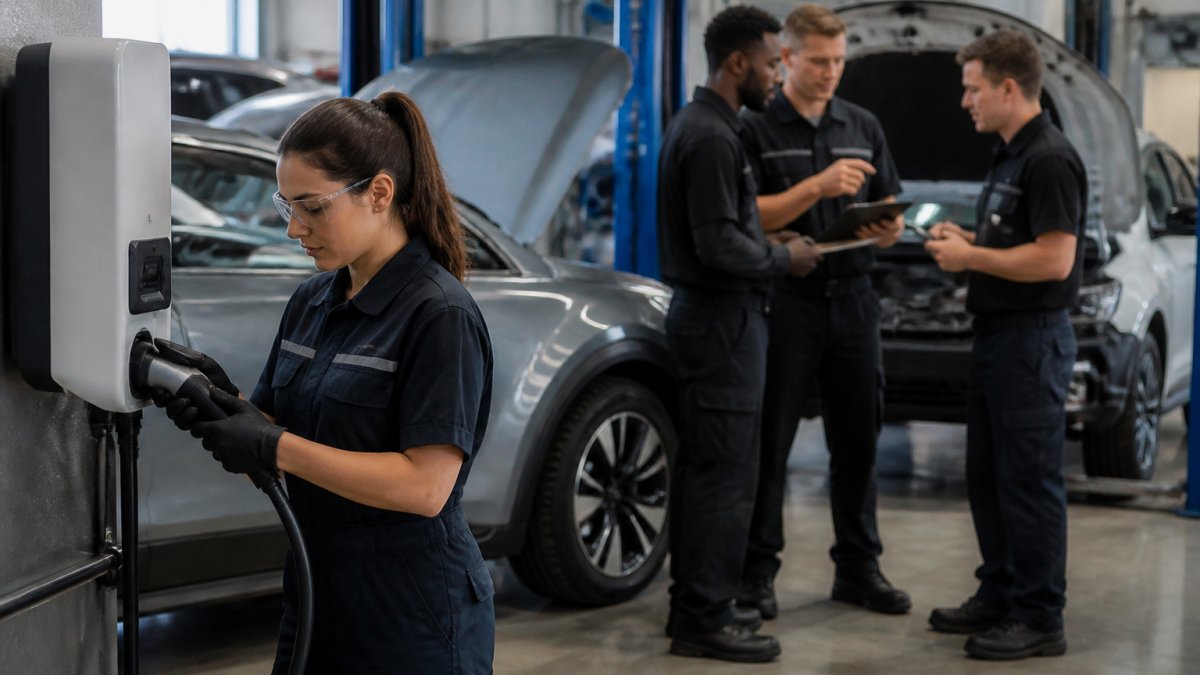
For dealership sales and management roles, target candidates with customer-facing experience and advertise where retail and hospitality professionals spend time.
For service technician and fixed operations roles, the pool is narrower but more defined. Advertise through trade channels, apprenticeship networks, and technical colleges, and partner with vocational training providers who know graduates before they hit the job market.
For emerging technology roles, EV diagnostics, software engineering, electrical systems specialists, you're competing with tech companies and other industries. Highlight the technical challenge and innovation. Emphasise learning opportunities and exposure to modern systems.
Across all roles, use your reputation. If your dealership treats staff well, invest in employer branding, share employee stories, and encourage referrals, referral hires typically stay longer and perform better.
To find automotive talent in 2026 also means being willing to train. Not every candidate will have every qualification you initially wanted.
Building Automotive Employee Retention and Career Development Pathways
Recruitment is only half the problem. If you hire well but lose people within 18 months, you're stuck in a cycle of recruitment costs and lost productivity.
Start with clear pathways. A technician should understand the progression: junior technician → technician → senior technician → workshop supervisor → service manager. A parts advisor should see a path to parts manager.
Next, invest in training and certification. Allocate budget for professional development and support technicians pursuing ASE certification, EV diagnostics training, or management qualifications.
Create mentorship structures. Pair experienced staff with newer hires, formal mentorship programs reduce turnover, accelerate competency development, and signal that your dealership values growth and knowledge-sharing.
Address compensation thoughtfully. Base pay matters, but so do benefits, bonuses, and recognition.
Finally, create feedback loops. Regular one-on-ones reveal what's working and what isn't. People leave for preventable reasons, lack of recognition, unclear expectations, limited growth, poor management, and regular conversations surface these before they become resignation triggers.
The dealerships with the lowest turnover aren't necessarily the highest-paying. They're the ones where staff feel valued, see genuine opportunities for advancement, and experience supportive management.
Your 2026 Hiring Action Plan
Here's how to build a hiring plan that works.
Step 1: Audit Your Current Vacancies and Forecast Future Needs
List every open role and every position you expect to open in the next 12 months, and estimate time-to-fill for each.
Step 2: Define Your Ideal Candidate Profile
For each role, write a detailed candidate profile. Not just skills and experience, but personality, values, and work style.
Step 3: Choose Your Recruitment Channels
Don't rely on job boards alone.
Step 4: Build Your Interview and Assessment Process
Define what you'll assess for each role: technical skills, cultural fit, communication ability, learning capability. Design interview questions and assessments that reveal these dimensions.
Step 5: Establish Clear Timelines and Ownership
Assign responsibility. Who's sourcing candidates? Who's screening? Who's interviewing? What are the decision timelines? Unclear ownership causes delays. Clear timelines create accountability.
Step 6: Plan for Onboarding and Development
To find automotive talent in 2026 isn't about posting jobs and hoping. It's about strategic planning, clear processes, and genuine investment in people.
At Automotive People Group, we help dealerships and automotive businesses build recruitment strategies that work.
If you're struggling to find the right people for critical roles, let's talk. We'll help you build a hiring plan that delivers results.
Frequently Asked Questions
What skills does an automotive technician need in 2026?
Modern automotive technicians need traditional mechanical expertise alongside emerging technical skills. Diagnostic ability, electrical system knowledge, and familiarity with hybrid and electric vehicle systems are increasingly essential. Strong communication, problem-solving, and customer service skills matter equally. Many employers now seek candidates with foundational software troubleshooting capability and the ability to work with advanced diagnostic equipment. Finding automotive talent means identifying candidates who combine hands-on mechanical competency with adaptability to rapid technological change.
How should an automotive technician job description be structured to attract quality candidates?
An effective automotive technician job description balances technical requirements with career opportunity. Start with specific responsibilities: diagnostics, repairs, maintenance tasks, and equipment used. Include required certifications and years of experience, but also highlight career development pathways and training investment. Be honest about working conditions and schedule expectations. Emphasise emerging opportunities like EV training or leadership roles. Candidates respond to descriptions that show growth potential, not just a list of daily tasks. Clarity about compensation, benefits, and company culture significantly improves application quality.
What automotive skills assessment methods work best for screening candidates?
Effective automotive skills assessment combines practical evaluation with technical knowledge testing. Hands-on diagnostics tasks reveal real-world capability and problem-solving approach. Written assessments test system knowledge and safety understanding. Practical demonstrations on common faults or component work identify mechanical competency and efficiency. Reference checks specifically targeting technical performance and reliability are valuable. Many employers combine these methods: a practical task reveals capability, written assessment confirms knowledge, and reference checks validate consistency. The strongest approach assesses not just what candidates know, but how they think through problems under realistic conditions.
How can automotive employers improve employee retention and reduce turnover?
Automotive employee retention depends on clear career pathways, competitive compensation, and workplace culture. Establish visible progression from technician to senior technician to supervisor or specialist roles. Invest in skills training and certification support, particularly in emerging technologies like electric vehicles and hybrid systems. Regular feedback, recognition of achievement, and flexible scheduling improve engagement. Competitive total rewards including superannuation, health benefits, and performance incentives matter significantly. Mentorship programs and peer collaboration reduce isolation. Employers who communicate long-term strategy and involve technicians in business decisions see markedly better retention. Retention is fundamentally about showing employees that their expertise and contribution are genuinely valued.
Where should automotive employers advertise technician and service roles?
Finding automotive talent requires a multi-channel approach. Industry-specific job boards and recruitment platforms reach active candidates actively seeking automotive roles. LinkedIn and general job sites capture passive candidates and career-switchers. Local community boards, TAFE partnerships, and apprenticeship programs access entry-level talent pipelines. Referral programs from existing staff often yield high-quality candidates who understand your culture. Specialist automotive recruitment agencies access passive candidates not actively job-hunting. Social media, particularly platforms popular with younger workers, builds employer brand awareness. Direct outreach to trade schools and automotive training providers creates ongoing talent pipelines. The most effective approach combines multiple channels rather than relying on a single source.
How long does it typically take to hire an automotive technician?
Hiring timelines vary significantly based on role specificity and candidate pool. Factors affecting speed include job description clarity, assessment efficiency, and decision-making processes. Proactive pipeline building through apprenticeships, training partnerships, and referral programs reduces time-to-fill significantly.
What makes finding automotive talent for electric vehicle roles different from traditional technician recruitment?
Finding automotive talent with EV expertise requires different sourcing and assessment strategies. Candidate pools are smaller, so passive recruitment and industry networks become more important than job boards alone. Look for candidates with electrical system knowledge, diagnostics experience, or formal EV training certifications. Emphasise training investment and career development in EV technology as a key attraction point. Assessment should test electrical troubleshooting and software interface familiarity, not just mechanical skill. Partnership with EV training providers and manufacturers creates access to specialist talent. Compensation for EV specialists typically exceeds traditional technician rates. Building your own EV capability through training existing staff often complements external recruitment.